A taxi only earns when it is on the road, so parts and accessories are not an afterthought — they are the difference between a profitable week and an idle one. Whether you run a purpose-built cab or a private hire car, knowing what wears, what it costs and where to source it keeps downtime short.
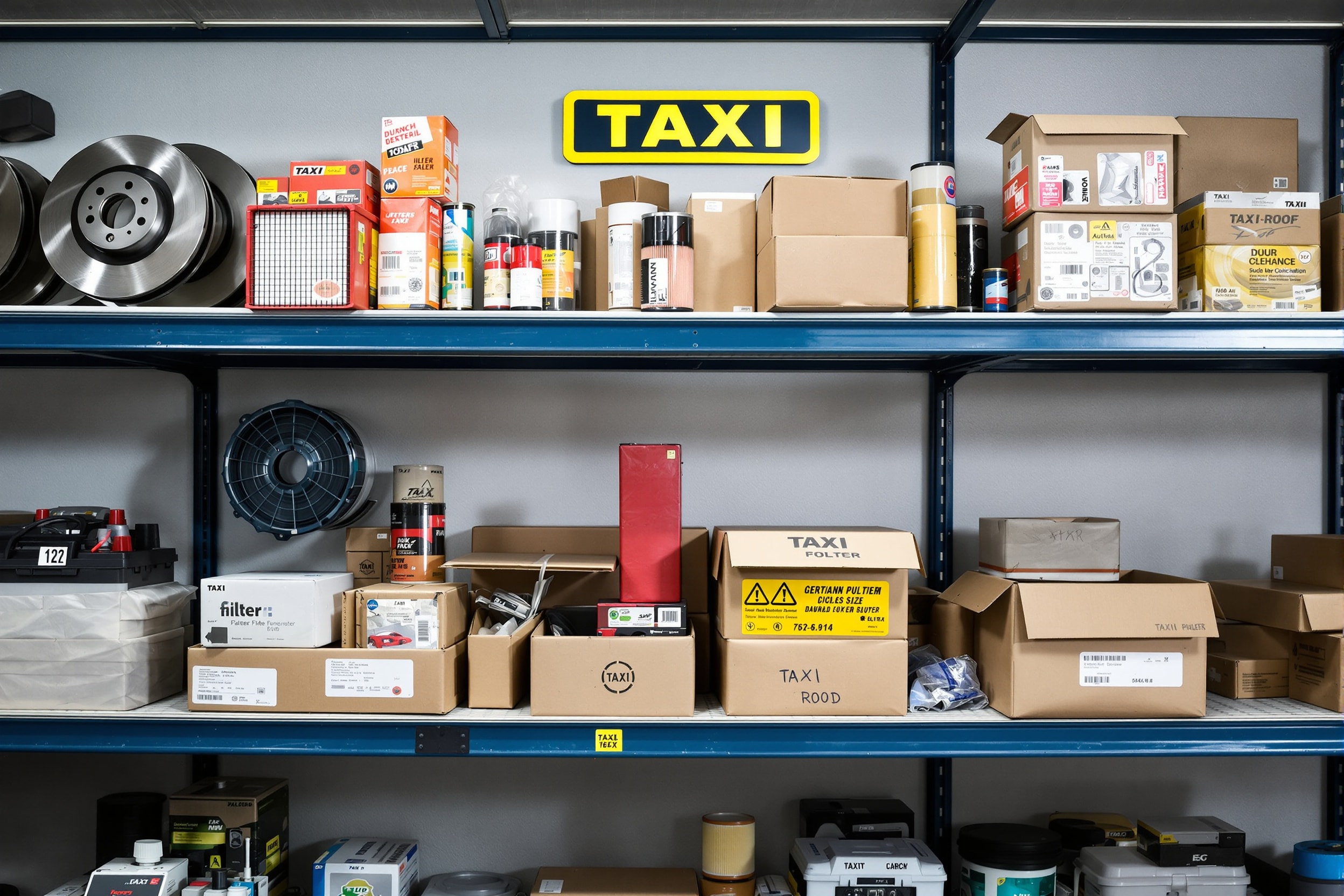
Common Wear Parts
High-mileage, stop-start work wears certain parts fast. Budget and plan for regular replacement of:
- Brake pads, discs and, on heavier vehicles, more frequent brake work.
- Clutches, especially on city cabs doing constant low-speed driving.
- Tyres, which wear quickly under the weight and the mileage.
- Suspension bushes, springs and dampers hammered by kerbs and speed bumps.
- Batteries and ancillaries, worked hard by lights, meters and long idling.
Keeping fast-moving consumables in stock, or a good relationship with a specialist who does, turns a breakdown into a quick fix rather than a lost day.
Taximeters
Where a vehicle uses a taximeter, it must be of an approved type, correctly calibrated to the local tariff and sealed. If you buy a cab with a meter fitted, expect to have it re-calibrated and re-sealed for your own council rather than assuming the previous settings carry over. Never tamper with a sealed meter.
Roof Signs and Livery
Roof signs, door signage and any council-required livery identify a licensed vehicle and must meet local rules. When buying, remember that another district's livery and signs will usually have to be removed or replaced — do not pay a premium for kit you will strip off. Our page on signage and window stickers covers the identification side in more detail.
Accessibility Equipment
Purpose-built cabs carry ramps, folding seats, grab handles and restraints as part of their accessibility compliance. These items wear and can be expensive, so include them in any inspection and factor replacement into your costs. Faulty accessibility equipment is both a compliance problem and a safety one.
Sourcing Parts Sensibly
Purpose-built taxi models have a specialist parts network, while private hire cars and minibuses draw on the mainstream aftermarket. Genuine and quality aftermarket parts usually pay for themselves in reliability on a vehicle that works this hard; the cheapest possible part is rarely the cheapest over a year. Keep receipts — a documented parts and service history adds real value when you come to sell.