Use this checklist when you view a used taxi. Inspect the vehicle in daylight, cold, and never feel rushed. If the seller will not allow a proper look, that is your answer. Work through each section in order and make notes as you go.
Bodywork and Structure
Taxis live hard lives in tight city traffic, so panel damage is common — what you are really checking for is structural trouble and hidden accident repair. Look along the panels for ripples and mismatched paint, check that panel gaps are even, and inspect the sills, wheel arches and boot floor for rust or fresh underseal hiding it. On accessible cabs, open and close the ramp or wheelchair door and check the floor and anchor points.
Under the Bonnet
- Start it from cold — listen for rattles, watch for smoke on start-up and under load.
- Check oil and coolant condition and levels; look for mayonnaise-like residue that can signal head-gasket trouble.
- Look for oil and coolant leaks around the engine and on the ground.
- Check the service history against the mileage — regular specialist servicing is worth a great deal.
Interior and Passenger Area
Passenger wear tells you the true hours behind the mileage. Check seat wear, floor condition, that all doors, windows and the intercom work, and that the heating and air conditioning both function. In a purpose-built cab, test the partition, the fold-down seats and the accessibility equipment. A worn but clean and working interior is fine; damp, strong odours or non-working equipment are bargaining points at best.
Tyres, Brakes and Suspension
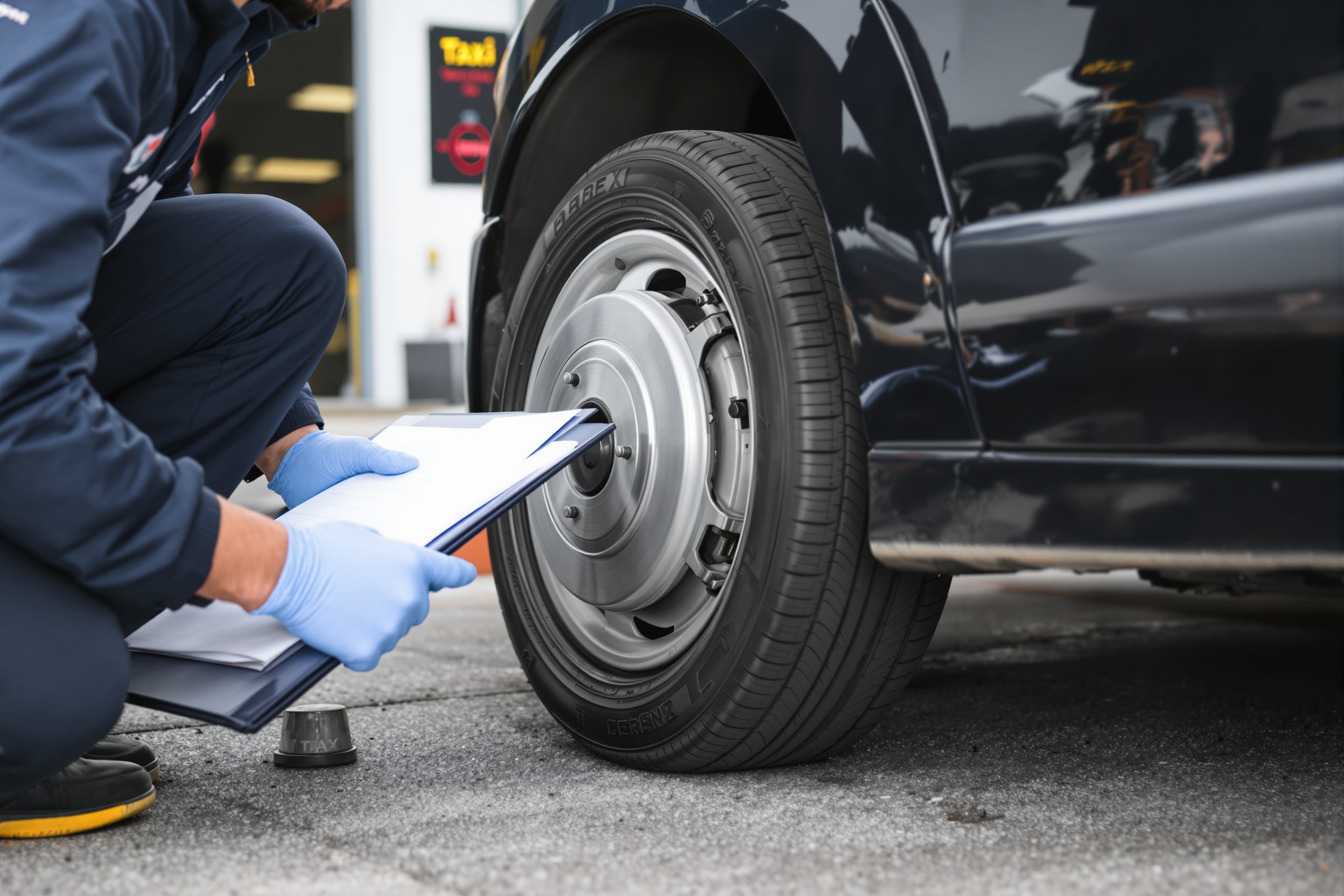
These are the fast-wearing, safety-critical items on a high-mileage vehicle. Check tyre tread and even wear (uneven wear points to tracking or suspension faults), feel for brakes that pull or judder on the test drive, and listen for knocks over bumps that suggest tired suspension or bushes. Factor any imminent replacements into your offer — a full set of tyres and a brake overhaul add up quickly.
Electrics, Meter and Signage
Work through the lights, indicators, wipers, dashboard warning lights and any roof sign. If the vehicle carries a taximeter, confirm it powers up and appears intact, though remember the meter will normally need re-calibrating and sealing for your own council after purchase. Do not pay extra for signage or a meter you will have to replace.
The Test Drive
Drive it properly: slow manoeuvring to feel the steering and clutch, a longer run to bring everything up to temperature, and a check that it holds a straight line under braking. A cab that drives sweetly cold and hot, with no warning lights and honest paperwork, is the one worth pursuing.
After You Buy: First Steps
The checks do not end at purchase. Before the vehicle earns a penny, line up the essentials: arrange the correct licensed-vehicle insurance so you are covered from the moment you drive it away, and book it in with your council for plating and any compliance inspection if the plate is not already transferring to you. If it carries a taximeter, have it re-calibrated to your local tariff and sealed.
It is also worth a precautionary first service with a specialist, even on a vehicle with good history — fresh oil, filters and a proper once-over turn an unknown into a known quantity and flag anything the seller missed. Swap over or remove another district's signage as covered on our signage page, and only then put the vehicle to work.
Paperwork Recap
Finally, confirm the V5C matches the vehicle, review the MOT history, check for outstanding finance, and verify the licensing plate as covered in our licensing overview. With the checklist done and the paperwork clean, you can make an offer with confidence — return to the buyer's guide for how to close the deal.